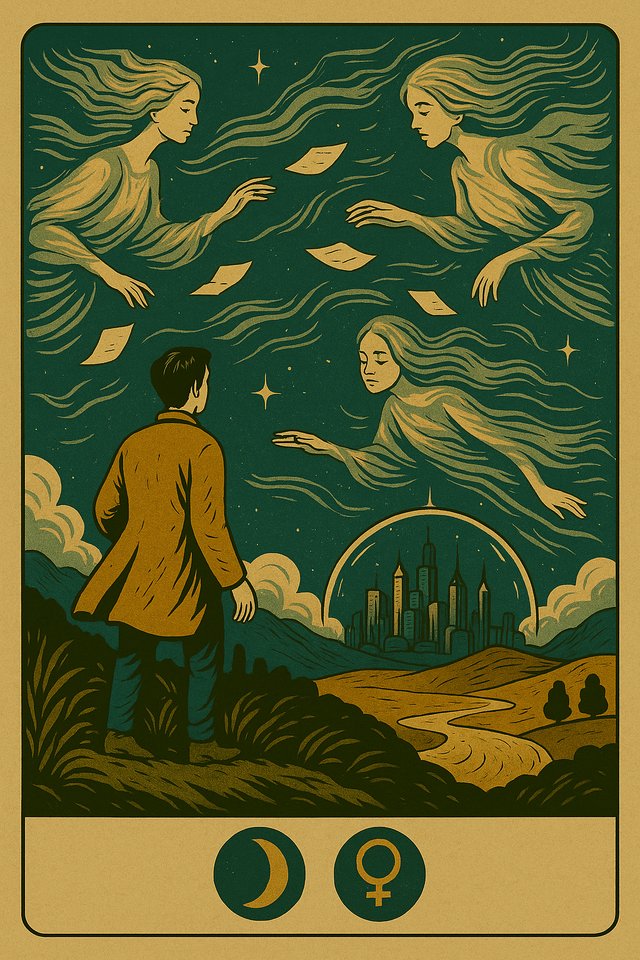
Every day thousands of stimuli reach us: the television, the phone, the billboards in the street, notifications, other people’s voices. And we are convinced that the thoughts we have are ours, born from us. Let’s try an experiment.
An ice cream at eight in the morning
You wake up, have breakfast, turn on the TV or scroll through your phone. An advert goes by: a beautiful, smiling person eating an ice cream. It lasts three seconds and you pay no attention.
But something has happened. In those three seconds an image touched a desire, the desire attached itself to the product, and that thought will stay with you in the background all day. Perhaps in the evening you will find yourself at the freezer cabinet without quite knowing why.
Marketing has known this for decades: touch the instinctive part and you bypass reasoning. It is not a conspiracy, it is how we work. And the lazier our attention, the easier it is.
We do not think: we are thought.
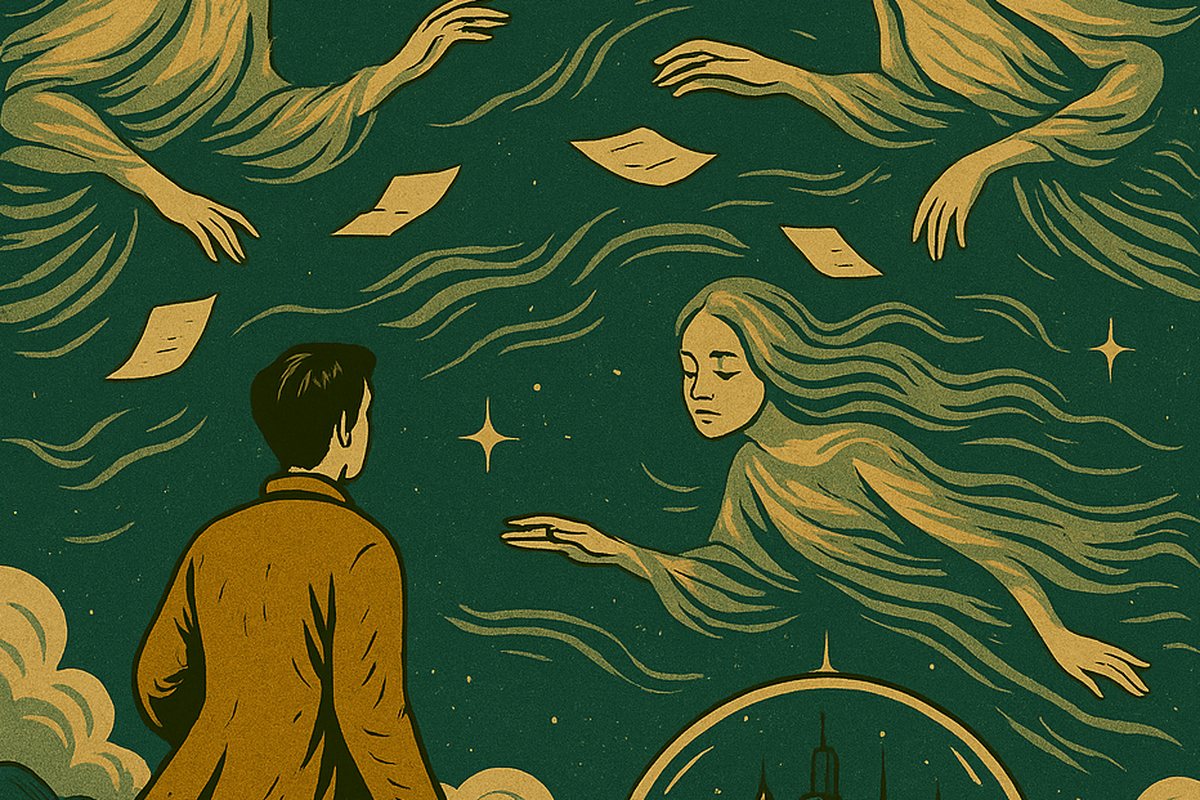
First we feel, then we think
Everything we see, hear or touch triggers a reaction that depends on what we have lived. The reaction becomes an emotion, and the emotion becomes a thought. It happens incredibly fast, almost imperceptibly.
The ancients spoke of the “intelligence of the heart”. Today we use it as a gentle figure of speech, but for them it was a precise description: the first movement starts from feeling, and only afterwards reaches the head, which processes it.
The winged chariot
In the Phaedrus, Plato describes this mechanism with an image I often use in workshops. The soul is like a winged chariot driven by a charioteer and pulled by two horses: one noble and obedient, the other unruly and of the opposite nature. Driving them, he writes, is a hard and troublesome task.
This is how I read it. The charioteer is our rational part. The white horse is deep feeling, the part that carries us towards something higher. The black horse is the most impulsive emotional part, the realm of automatic reactions. In our society the black horse is far stronger, and it is the one that almost always chooses the road.
The charioteer doesn’t command: he knows
This is the point that changed the way I see things. The charioteer cannot force the direction: the horses are stronger than he is, and they don’t speak his language.
The only thing he can do is get to know them. Watch them closely, learn how they move, notice when one of them takes over.
The same is true of thoughts. You cannot control them on command, but you can observe them. And when you observe them, something changes: passive thinking, the kind that comes from outside, begins to become living thought, your own. From being thought, you become a thinker. Massimo Scaligero put it this way: true feeling is a living act, not prompted from outside, and that is where free thinking is born.
The first step
The first step is not to think more, or to think better. It is to slow down: to notice that a thought is arriving, and where from, before you climb on board.
It is the stage I call Observation in the P.R.O.C.E.D.O.© Method: seeing how a reaction forms, without judging it.
Pick a moment of the day, breakfast for example. For three days, notice the first strong thought that arrives after you look at your phone or the TV. Ask yourself: was it mine, or did it come from outside?
Share this article
If it made you think, it might make someone else think too.
Want to read the next article?
Leave your details and I’ll let you know when it’s out. Or experience the Method in a workshop.